Home Blog Page 25

Basic Principles Of Nursing Practicing And Ways Of Handling Patients

In this blog post, you will learn the concepts of infection prevention and control, which you will apply in nursing practice as a potential nurse, or practicing nurse.

You will also learn some of the basic procedures in nursing which include how to lift and move patients; collect specimens; neurological assessment; take vital signs; and drugs administration, contradiction, and interaction; incisions and drainage; monitor intravenous fluids; take care of your patients, record-keeping, office management, etc.

Principles Of Nursing Practicing In Nigeria

Nursing practice is the application of acquired knowledge and skills that help to improve an individual’s level of health. As such, all nurses, irrespective of their level of educational preparation, should learn basic skills that are fundamental to the practice of nursing.

The American Nurses Association states that “Nursing is the diagnosis and treatment of human responses to actual or potential health problems. Nursing involves skills that are beneficial to sick or well individuals.”

As a student nurse, you are being prepared by professionals to provide services in many diverse settings such as hospitals, schools, industry, and home care.

What are the major goals of nursing?

  • Promote health and prevent diseases
  • Restore health
  • Relieve suffering

What nursing skills do for patients

  • Nursing skills help patients breathe normally
  • Helps patients eat and drink adequately
  • Eliminate body wastes
  • Move and maintain desirable postures
  • Sleep and rest
  • Select suitable clothing, dress and undress
  • Maintain body temperature within normal range by adjusting clothing and modifying the environment
  • Keep the body clean and well groomed and protect the integument
  • Provide their basic needs
  • Communicate with others in expressing emotions, needs fears or options
  • Worship according to ones faith
  • Work in such a way that there is a sense of accomplishment
  • Reassure them of good health
  • Play or participate in various forms of recreation
  • Assist them with relevant things
  • Give them hope
  • Learn, discover and satisfy the curiosity that leads to normal health and use of the available health facilities

Therefore, in the provision of comprehensive care, as stated, Nurses will be required to apply sciences such as sociology and psychology. Nurses will also be required to incorporate certain skills such as assessment, caring, counseling, and comforting skills.

How to lift and move your patients as a Nurse

Certain techniques are used when lifting and moving your patient to help prevent injury to the patient as well as to the nurse.

Know the patient’s diagnosis, capabilities, weaknesses, and any movement they are not allowed to undertake. They include:

  • Put on braces and other devices a patient may use before getting them out of bed.
  • Plan exactly what will be done while transferring a patient so that appropriate techniques will be utilised. This is because without planning you or the patient may acquire an injury.
  • Explain to the patient what will be done. Then use the patients ability to assist as much as possible to reduce the workload on you, the nurse.
  • Remove obstacles that may make transferring more difficult prior to transferral.
  • Elevate the patient’s bed as necessary so that work is being done at a safe and comfortable level.
  • Lock the wheels of the bed, wheelchair or stretcher to prevent them from sliding as the patient is moved.

Basic Guidelines when Transferring Your Patient

Observe sound principles of body mechanics so that muscles are not strained and injured.

  • Be sure to keep the patients in proper alignment during transfer procedures so that the patient is also protected from strain and muscle injury.
  • Support the patient’s body, especially near the joints. Avoid grabbing and holding extremely by the muscles, which will injure tissues and often put unnecessary strain on joints.
  • Avoid causing friction on the patient’s skin. Roll or push the patient when possible rather than pull them across bed linens. Friction can be reduced by sprinkling powder or cornstarch on the patient’s skin and linens.
  • Use smooth rather than jerky movements when transferring the patient. Jerky motion tends to put extra strain on muscles and joints and is uncomfortable for the patient.
  • Be realistic about how much you can safely do without injury

How To Transfer Your Patient To and From a Stretcher

You must take absolute care, when transferring your helpless patient, to prevent injuring the patient and yourself.

The extremities and the head must be supported well. The most convenient way to move a patient is to place a sheet underneath them, then pull carefully on the sheet under the patient to another point, such as from a bed to a stretcher and from a stretcher back to a bed.

When a patient must be lifted and carried, a three-carrier lift is recommended.

Transferring Your Patient From a Bed to a Chair and Back to Bed

The chair in which a patient sits should make it possible for them to maintain good posture. If a patient can assist and stand while they are being transferred from a bed to a chair or wheel chair, use the following techniques:

  • Use equipment with firm and stable surfaces. If the mattress is soft and the patient sinks into it, place a bed board under it before transferring the patient to a chair or wheelchair
  • Take the patient’s condition into account
  • Make distance for transferring as short as possible
  • Place the chair or wheel chair parallel to and near to the head of the bed. Be sure that the wheels of a wheelchair are locked and the foot supports are in the upright position
  • Place the short bed rails in the up position so that the patient can grasp a rail to sit up in bed and steady their self as they move.
  • Stand on the side of the bed on which the patient will be moving. Do not reach across the bed to assist the patient. Help the patient to a sitting position.
  • Allow the patient to sit a few seconds until you are sure they are not feeling faint.
  • Pivot the patient appropriately as they sit at the side of the bed. If they are going to walk, help them put on shoes and stockings. Hard soled and well fitting shoes will give them more support than loose, floppy slippers.
  • Place the bed in the low position or have a foot-stool handy on which the patient can stand on as they get out of bed.
  • Face the patient, spread their feet to provide a wide base of support and balance, put one of your feet forward between the patient’s feet, and flex the knees to provide stability. The patient puts their hands on your shoulders, while you hold in the ancillary area. Grasping the patient on their chest wall is uncomfortable and restricts breathing.

Some nurses prefer to lock arms to assist the patient to a standing position. This entails the following procedure:

  • As the patient’s upper body is lifted, ask the patient to lift their self from the bed. If a footstool is used, assist the patient off of it while continuing to hold them.
  • Maintain a wide base of support while pivoting with the patient so that their back is towards the chair.
  • Bend the knees and keep the back straight as the patient is lowered into the chair or wheel chair.

After helping the patient to their feet, you should assist them into their chair. A chair with arms would provide another

means for the patient to help support and guide them into the chair.

Have the patient assist by holding onto the armrests of the chair or wheelchair if they are available as they are being lowered onto it.

When a patient cannot assist with the transfer, for example, a patient cannot stand before they sit in a chair, it is best to have two persons lift the patient from the bed into a chair. One person can do so unless the patient is too heavy.
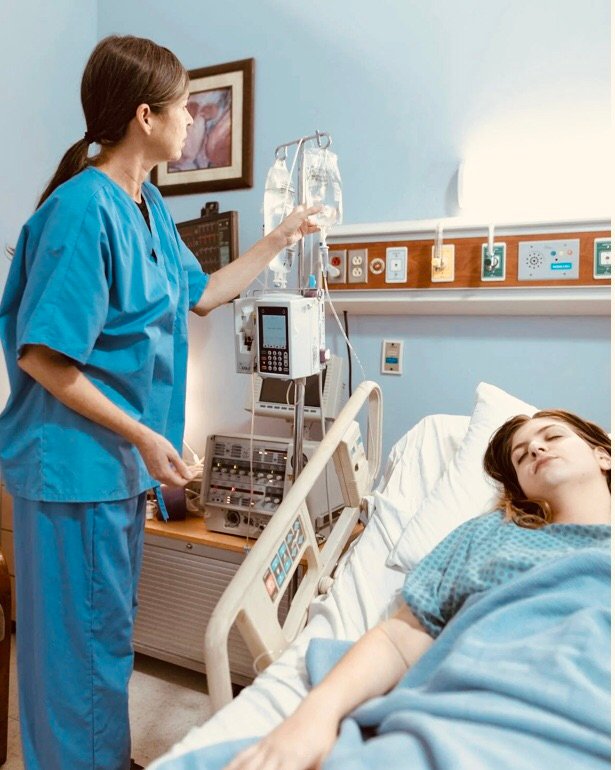
The single-person technique is handy for home use and in situations when only one person is available. With the chair near the bed, and while supporting the patient from the back, gently move the helpless patient into the chair. You should have a wide base of support. Bend your knees and rock back as the patient slides to the chair. Place the patient’s feet and legs onto the bed first as you roll them off the chair and onto the bed.


Scientific Principles Of Nursing Management

What is Nursing Management?

Nursing Management as a matron, or M.D in a health facility is the art of getting things done through people in order to achieve the facility objectives.

Management is also the systematic process which involves planning, organizing, staffing, leading and controlling the efforts of organizational members and using all other resources to achieve stated organizational objectives.

Management can be defined as the process by which resources are mobilized, combined and coordinated to effectively to achieve organizational objectives.
It is a process that utilizes organizational resources in the most effective and efficient manner, in order to attain stated organizational objectives.

Efficiency and Effectiveness in Nursing Management

Efficiency in management refers to optimal utilization of organization resources with minimal wastage. Nurses hardly waste the facility’s resources. They are known to be good managers.

It is also the relationship between achieving the objectives of the facility and judicious consumption of resources.
Effectiveness refers to attaining specific facility goals that are timely and challenging.

It is also an outcome measure of the interventions that improve peoples health under ordinary circumstances and in ordinary settings.

15 Examples of Nursing Management Skills

  • Conflict resolution.
  • Mentoring.
  • Decision-making.
  • Patience.
  • Attention.
  • Tolerance.
  • Kindness.
  • Love.
  • Professionalism.
  • Time management.
  • Adaptability.
  • Dedication.
  • Diligence
  • Empathy
  • Create a goal.

Management versus Administration

Administration is part of management work but more concerned with execution. In Nursing Management, proper administration is very important. Nurses are the people who manage patients by administering their prescriptions and taking good care of them.

A manager is said to be performing administrative work when he/she is involved in interpreting policies of the organization and putting into plans and having those plans implemented.
At every level of management, managers perform some work which involves execution or “doing” which is one that completes the administrative process.
Therefore administration is the total of planning, organizing, controlling, coordinating and also operating work.

Who is a manager in health facilities?

This is an individual (Nurse) employed by a facility who is responsible and accountable for efficiently accomplishing the goals of the facility.
Nurses as managers focus on coordinating and integrating resources using the functions of planning, organizing, supervising, staffing, evaluating, negotiating, and representing.

Characteristics of a Managing Nurse

Managers have assigned positions within a formal organization.
They have legitimate source of power due to delegated authority that accompanies their position.
They direct willing and unwilling subordinates.
Since managers work in a formal organization, they have a greater formal responsibility and accountability for rationality and control than leaders.
They are also expected to carry out specific functions, and responsibilities.
Managers also manipulate people, the environment, money, time, and other resources to achieve organizational goals
Managers work at various levels in an organization. The number of levels will depend on the size of the organization. Generally three levels of management are used.
Levels of management
managerial levels

1. First level management:

The first level managers are also referred as first line managers they are responsible for supervising the work of non-managerial personnel and the day to day activities of a specific work units or ward.
They are the lowest level. In a hospital, setting these would include, ward In-charge. They are responsible for clinical practice, assigning staff to patients, interfacing with the public, patient care delivery
Personnel development, ensuring compliance with regulatory and professional standards, maintaining discipline and motivating staff to achieve the organizational goals.
First level managers are also responsible for fostering inter-disciplinary, collaborative and strategic planning

2. Middle level Management:

The middle level managers supervise a number of first level managers usually with related specialties or in a given geographical area.
They have a 24hr responsibility for their defined area.
Typically middle level managers act as liaison between upper management and first level managers.
They are responsible for implementing the policies and plans developed by top managers. They also supervise and coordinate the activities of first line managers
A middle level manager maybe referred as a supervisor, director or assistant director. This group constitutes the largest group of managers
3. Upper level management (top managers):

This refers to top executives (such as Chief Nurse,rco) to whom the middle managers report.
They are responsible for establishing organizational goals and strategic plans for the entire organization and operating policies for the entire division
They also ensure integration of work units to achieve the organization mission and buffering the effects of the external environment on workers within the organization.
Top managers are relatively a small group

Management Roles

Interpersonal roles:

  • Figure head role: symbolizes the organization or department and performs ceremonial duties
  • Leader: determines the Mission and Objectives of the organization and sees that they are accomplished effectively. He hires, trains and motivates employees and encourages them to do better.
  • Liaison role: Involves networking with outside organizations, expanding information sources, like conferences, professional meetings etc. Acts as a link between people, groups or organizations within and without the organization

Informational role:

  • Monitor: As a monitor, the manager informally seeks information about the organization through internal networks, gossips, and observations. (Get information useful to organization). He/she tours of the organization and holds formal and informal meetings to provide information about the needs of the organization
  • Disseminator: A manager is a link in the organization chain of command. He shares information from outside the organization and between work units (sharing information improves job satisfaction).
  • Spokes person: The manager shares information with individuals outside the organization, attends meetings, offering continuing education and participates in professional organizations

Decisional Roles:

The Entrepreneur: The manager looks for profitable investments for the organization to improve its performance (start a school of nursing)

  • Resource allocator; Managers schedule their own time (work plan). They decide how resources are distributed and with whom he will work most closely with.
  • Negotiator: Enters into negotiation with other parties e.g. to enter into a long term relationship with a supplier
  • Disturbance handler: Responds to unforeseen circumstances eg. Replacement of sick staff, missing equipment, disease outbreaks (shift staff).

ATTRIBUTES AND QUALITIES OF A MANAGER

  • Technical competence
  • Social & human skills
  • Conceptual ability

Historical Development of Management


Management has been developed through the following periods:

  • The classical theories
  • Neo classical theories

SCIENTIFIC / CLASSICAL APPROACH

Described management as a science

– focused on formal structure, technical requirements of the organization, and general sets of principles

– Listed duties of a manager

HUMAN RELATIONS APPROACH

– focused on the informal organisation and the psychological & social needs of people at work

Principles of scientific management

  1. Observing the workers’ performance through time and motion study to determine the one best way to carry out each task (develop a science for each element of man’s work to maximize organization output)
  2. Scientifically selecting the best worker to perform each job, that is the person with characters and abilities needed to carry out job tasks in the most efficient manner.
  3. Training the selected worker to perform tasks in the most efficient manner
  4. Paying the worker a differential piece rate to motivate them to perform the tasks in prescribed, efficient fashion
  5. Appointing a few highly skilled workers to managerial positions and giving each manager responsibility for planning tasks for subordinate workers
  6. Appointing a foreman for each aspect of the work and instructing the production worker to report to a different functional foreman for each aspect of the job.

Principles Of Management

  1. Specialization or division of labor
    Reduces span of attention or effort for any one person or group.
    Develops practice and familiarity
    Specializing encourages continuous improvement in skills and the development of improvements in methods.
  2. Authority
    Rights to give order
    Should be accompanied by responsibility
    The right to give orders and the power to exact obedience.
  3. Discipline.
    This is defined as respect for agreements which are directed at achieving obedience. Obedience must prevail throughout the organization as its essential for smooth running of an enterprise.
    outward mark of respect accordance with formal or informal agreement between firm and employees
    No slacking, bending of rules.
  4. Unity of command.
    Every subordinate should receive orders and be accountable to only one supervisor. Dual or multiple commands is a perpetual source of conflict. Unity of command avoids conflicting orders and ensures order stability in the organization
    One man, one superior -Each employee has one and only one boss.
  5. Unity of direction.
    According to this principle, each ground of activities having the same objective must have one head and one plan.

One head, one person (director) and one plan for a group of activities with one objective. A single mind generates a single plan and all play their part in that plan.

  1. Subordination of Individual Interests to general interests.
  2. Efforts should be made to reconcile individual interests with common interests. When there is conflict between the two, the interests of organization should prevail over individual interests.
  3. Interest of one individual or one group should be subordinate( not prevail over the general good (total workgroup)
  4. When at work, only work things should be pursued or thought about.
  5. Remuneration of personnel.
  6. The amount of remuneration and the methods of payment should be just and fair and should provide the maximum possible satisfaction to both employees and employers pay should be fair to both employees and the firm.
  7. Employees receive fair payment for services, not what the company can get away with.
  8. Centralization;
  9. The degree of concentration of authority should be based upon optimum utilization of all faculties of the personnel.
  10. Depending on size of company and quality of managers.
  11. Consolidation of management functions.
  12. Decisions are made from the top.
  13. Scalar Chain (line of authority).
  14. There should be a clear line of authority ranging from top to down of the organization. All upward and downward communication should flow through each position of authority along the scalar chain. There should be an unbroken chain of authority extending from top executive to lowest level worker.
  15. Formal chain of command running from top to bottom of the organization, like military
  16. Order
  17. All materials and personnel have a prescribed place, and they must remain there. The right man should be in the right place. A place for everything &everything in its own place, the right man in the right place.
  18. All materials and personnel have a prescribed place, and they must remain there.
  19. Equity
  20. This means that employees should be treated with justice and kindness. Managers should be fair and impartial in their dealings with subordinates Treat every employee with equity &justice.
  21. A combination of justice and kindliness towards employees.
  22. Equality of treatment (but not necessarily identical treatment)
  23. Stability of tenure of personnel.
  24. Employees cannot work efficiently unless job security is assured of them.
  25. Employees need time to settle into their jobs,
  26. This may be lengthy times.
  27. Limited turnover of personnel.
  28. Lifetime employment for good workers.
  29. Initiative.

Health & Nutrition Team Leader At FHI 360

Organizational Overview:

FHI 360 is a nonprofit human development organization dedicated to improving lives in lasting ways by advancing integrated, locally driven solutions. Our staff includes experts in health, education, nutrition, environment, economic development, civil society, gender equality, youth, research, technology, communication, and social marketing — creating a unique mix of capabilities to address today’s interrelated development and humanitarian challenge in more than 70 countries. FHI 360’s Crisis Response team is responding to the humanitarian emergency in the Northern Ethiopia through an integrated health, nutrition, WASH, and Protection program focused on decreasing morbidity and mortality among the conflict-affected population.

Job Summary:

Under supervision of the Deputy Response Coordinator, the Health and Nutrition Team leader will lead the health and nutrition program activities implementation in Amhara, Ethiopia. The Health Nutrition Team leader is responsible for the overall leadership in planning, executing, and coordinating the efforts of team members and stakeholders in order to deliver the health and nutrition activities in line with the ISHI-NE project proposal and plan. The Health and Nutrition Team leader will manage and define the project’s objectives and oversee quality control throughout the completion of the project’s life cycle. They will also create work plans based on the goals of the project, implement evidence-based interventions in multi-sector areas and collaborate with other sectors to create integrated work plans and budgets that are essential for the success of the project. Additionally, the Health and Nutrition Team leader will take lead on ensuring the Health and Nutrition activities are in line with the fhi360 guideline and RHB protocols and cluster coordination.

In this particular context, the Crisis Response Team requires the services of a highly skilled Health and Nutrition Staff to support the coordination of Health and Nutrition activities in Amhara region, Ethiopia. The staff will engage with cluster leads, government of Ethiopia officials, health facility-based personnel and other NGO partners to discuss the pressing needs and challenges of the impacted area. The staff will participate in start-up, continuations where applicable and overall implementation of the health and nutrition activities in Amhara and Mekelle project sites. The following are the specific tasks and responsibilities

Accountabilities:

  • The Health and Nutrition team leader will be responsible for the overall implementation of the health and nutrition component of a humanitarian program with the goal of improving the well-being of affected communities through access to primary health, community health and reproductive health care, nutritional status of the most vulnerable groups, including pregnant and lactating women and children under 59 months and strengthen health systems in the areas of implementation.
  • Organize and oversee the overall implementation of the medical outreach activities
  • Lead in assessments and defining FHI360 operation locations in the sector in liaison with cluster coordination and RHB
  • Monitor progress on the delivery of all health and nutrition-related activities and ensure that objectives are being met on time and on scope per annual workplans.
  • Conduct all health and nutrition-related assessments, provide technical guidance on appropriate emergency activities, and devise sector-specific response strategies for the acute, transitional phases of emergency operations in crisis-affected communities and transitional phases of emergency operations in crisis-affected communities.
  • Provide technical guidance on appropriate emergency activities, and devise sector-specific response strategies for the acute and transitional phases of emergency operations.
  • Develop partnerships and ensure effective coordination with local service providers and international organizations operating in the sector and attend health and nutrition cluster meetings.
  • Work with operations staff and partners to ensure pharmaceutical and medical commodities and services are procured, handled, and managed properly, in accordance with the organization’s supply-chain management protocols.
  • Work closely with other sectors in cross cutting activities in WASH and Protection to ensure smooth implementation of the health components and the ISHI_NE integrated project
  • Manage health and Nutrition program budget, including routine expense forecasting and pipeline analysis.
  • Determine staffing needs for health and nutrition programming, conduct recruitment in collaboration with management and home office technical staff, as necessary.
  • Manage health and nutrition sector field personnel supporting the program and build their capacity to effectively respond to the health component of the project.
  • Assist with resource mobilization by designing, drafting, and reviewing concept notes and technical proposals for emergency operations and related programming, as required.
  • Develop partnerships and ensure effective coordination with local service providers and international organizations operating in the sector and attend regional cluster meetings.
  • Work with operations staff and partners to ensure commodities are procured, handled, and managed properly, in accordance with the organization’s pharmaceutical supply-chain management protocol

Applied Knowledge & Skills:

  • Ensures appropriate and timely technical support for field projects.
  • Ensures the quality of implemented technical activities and systems at all levels.
  • Conducts routine coordination with employees and consultants, on-site and in the field.
  • Strong knowledge and skills in a specific technical area/function and general understanding of concepts and principles of related technical areas/functions.
  • Solid knowledge of standards for the technical area/field, operational processes and procedures, work, and task flow.
  • Has the ability to manage projects, set realistic priorities, and plan for the successful implementation of activities.
  • Proficient writing and verbal communication skills.
  • Relevant computer software skills (including, at a minimum, the standard applications in MS Office).
  • Ability to manage their own work to job and performance standards.
  • Must be able to read, write and speak fluent English fluent in host country language.

Problem Solving & Impact:

  • Demonstrates the ability to assess needs within agreed upon duties and considers course of action best to meet those needs.
  • Effectively applies knowledge of technical area to solve a range of problems.
  • Demonstrates the ability to develop solutions to problems that cannot be solved using existing methods or approaches.
  • Faulty decisions/ recommendations /failures to complete assignments will normally result in serious delays to assigned projects resulting in considerable expenditure of additional time, resources, and funds.
  • Decisions and actions impact primarily workflow, project processes and timeframes.
  • Problems encountered are varied, requiring review of practices and precedents to resolve.
  • Problem solving involves evaluating and resolving discrepancies with data, analyses, processes, etc. within prescribed guidelines.
  • Policies or guidelines exist for most problems; others must be referred to by a supervisor or more senior professional.

Supervision Given/Received:

  • May supervise junior staff members.
  • Coordinates own workflow and sets individual priorities.
  • Works under general guidelines for completion and accuracy as determined by the supervisor.
  • Accomplishes results through lower-level staff managers or through experienced staff who exercise independence in their assignments.
  • May manage a centralized functional area of activity.
  • Serves as mentor to more inexperienced technical staff.
  • Typically reports to Health & Nutrition Coordinator

Job Requirement

Education:

  • Master’s Degree or its International Equivalent in Knowledge/Information Services, Communications, Education, Environment, Health, Behavioral, Life/Social Sciences International Development, Human Development or Related Field.
  • Project Management (PM) Certification preferred.

Experience:

  • Over 6+ years of relevant experience in technical implementation of large projects and/or programs may manage activities of lower-level staff, however, main function is individual contributor.
  • Documented experience providing technical assistance, capacity building and business development in the specific technical domain.
  • Prior work experience in a non-governmental organization (NGO), government agency, or private organization. International or Domestic (US) Program Development or Program management preferred.
  • Experience establishing and leading successful startup operations/projects in complex emergencies situations
  • Significant background in managing public health initiatives is required
  • Experience leading technical assessments using methodologies such as SMART and SQUEAC; strong background in outcome monitoring and evaluation is preferred
  • Experience coordinating complex health programs with wide variety of stakeholders; experience as cluster co-lead is desirable
  • Knowledge and application of Office of US Foreign Disaster (OFDA), BHA and UN donors required.
  • Skilled in developing responsive, evidence-based program designs, including budget development.
  • Prior work experience in a non-governmental organization (NGO), government agency, or private company of progressive program management experience in humanitarian assistance or related industry experience in a relevant technical area.
  • Familiar with and abide by Red Cross/Non-Government Organization (NGO) Code of Conduct.
  • Experience coordinating complex programs with wide variety of stakeholders; experience as cluster co-lead preferred.
  • Breadth of geographic location experience preferred.
  • Sensitivity to cultural diversity and understanding of the political, contextual, and ethical issues in assigned area
  • Computer, Microsoft Office 365 (i.e., Word, Excel, PowerPoint, e-mail), office telephone, cell phone and printer/copier
  • Excellent written and oral communication skills in English
  • Expertise in humanitarian health programming, specifically first-phase response operations

Typical Physical Demands:

  • Typical office environment.
  • Ability to spend long hours looking at computer screen and doing repetitive work on a keyboard.
  • Ability to sit and stand for extended periods of time.
  • Ability to lift/move up to 5 lbs.

Technology to be Used:

  • Laptop, Microsoft applications (i.e., Office 365, SharePoint, Skype/Zoom/Teams), cell phone/mobile technology, and standard office equipment.

Travel Requirements:

  • 10% – 25%

This job posting summarizes the main duties of the job. It neither prescribes nor restricts the exact tasks that may be assigned to carry out these duties. This document should not be construed in any way to represent a contract of employment. Management reserves the right to review and revise this document at any time.

FHI 360 is an equal opportunity and affirmative action employerwhereby we do not engage in practices that discriminate against any person employed or seeking employment based on race, color, religion, gender orientation, gender identity, national or ethnic origin, age, marital status, physical or mental disability, protected Veteran status, or any other characteristic protected under applicable law.

Our values and commitments to safeguarding:FHI 360 is committed to preventing any type of abuse, exploitation and harassment in our work environments and programs, including sexual abuse, exploitation and harassment. FHI 360 takes steps to safeguard the welfare of everyone who engages with our organization and programs and requires that all personnel, including staff members and volunteers, share this commitment and sign our code of conduct. All offers of employment will be subject to appropriate screening checks, including reference, criminal record and terrorism finance checks. FHI 360 also participates in the Inter-Agency Misconduct Disclosure Scheme (MDS), facilitated by the Steering Committee for Humanitarian Response. In line with the MDS, we will request information from job applicants’ previous employers about any substantiated findings of sexual abuse, exploitation and/or harassment during the applicant’s tenure with previous employers. By applying, job applicants confirm their understanding of these recruitment procedures and consent to these screening checks.

FHI 360 will consider for employment all qualified applicants, including those with criminal histories, in a manner consistent with the requirements of applicable state and local laws.

FHI 360 will never ask you for your career site username or password, and we will never request money, goods or services during the application, recruitment or employment process. If you have questions or concerns about correspondence from us, please email CareerCenterSupport@fhi360.org.

FHI 360 fosters the strength and health of its workforce through a competitive benefits package, professional development and policies and programs that support a healthy work/life balance. Join our global workforce to make a positive difference for others — and yourself.

Please click here to continue searching FHI 360’s Career Portal.

Community Health Officer – Norwegian Red Cross at the (IFRC)

The International Federation of Red Cross and Red Crescent Societies (IFRC) is the world’s largest humanitarian organization, with a network of 192-member National Societies (NSs). The overall aim of IFRC is “to inspire, encourage, facilitate, and promote at all times all forms of humanitarian activities by NSs with a view to preventing and alleviating human suffering and thereby contributing to the maintenance and promotion of human dignity and peace in the world.”  IFRC works to meet the needs and improve the lives of vulnerable people before, during and after disasters, health emergencies and other crises.

We are recruiting to fill the position below:

Job Title: Community Health Officer – Norwegian Red Cross

Vacancy No.: S06326
Location: Benue
Duration: 7 months
Contract Type: Integration

Job Purpose

  • The Community Health Officer (CHO) position will support in planning, implementation and close monitoring of this community Health Programme in the assigned state.
  • He/she will report to NorCross Programme Coordinator (Direct supervisor) and will work in close collaboration with the NRCS branches, health team, ICRC and other movement partners.

Purpose

  • Focal point for all matters related to the Norcross supported community-based health in Benue state, including but not limited to promotive and preventive healthcare, communicable diseases, nutrition, hygiene promotion and sexual and gender-based violence.
  • Maintains a global overview of health in the strategic areas, represents NorCross in health forums and works closely with relevant movement partners and actors implementing health-related activities in the area.
  • Supports planning and implementation of trainings and other capacity building activities
  • Supports with background information and data for resources mobilization, monitors and reports on the community health program.
  • This position is based within the Norwegian Red Cross country office in Benue, Nigeria

Job Duties and Responsibilities
Accountabilities and responsibilities:

  • Ensure timely implementation and quality monitoring of Norcross supported community health projects in the assigned area, through structured and regular monitoring, field visits, follow up and reporting.
  • Ensure that all activities are implemented in collaboration with the SMOH/LGA health/nutrition authorities, national protocols are observed/available and in line NorCross strategies.
  • Advise the NRCS and branches on evidence-based interaction with community members and groups on issues related to diagnostic screenings, sanitation or hygiene, self-care, risk or prevention of conditions and issues related to improving general health
  • Technically support the Operational National Society (NRCS) to better plan for future projects, review and provide input to reports, analyse trends and suggest project adjustments.
  • Work in collaboration with NRCS and branches and other key actors in matters related to community health project and field security management and fully ensure respect for security rules.
  • Organize for a joint filed monitoring field visits with NRCS to project sites
  • Ensure Community Engagement and Accountability methodologies are used in the design and implementation of community-based health projects.
  • Ensure that community health volunteers receive consistent professional clinical supervision, and that outreach activities are tied to the provision of adequate clinical services.
  • Support the integration of relevant activities to improve health status of beneficiaries and facilitate access to adequate services for survivors of sexual and gender-based violence, when
  • Support the linkages of community health interventions with appropriate clinical supervision e.g. monitoring for remote and inaccessible areas, measuring progress towards health outcomes.
  • Support multi-disciplinary assessments, identifies needs and contributes to planning new programs and ongoing monitoring of existing programs.
  • Develop and maintain a dialogue with health staff/LGA nutrition authorities in catchment areas
  • Identify training needs for staff and volunteers and implement training programs.

Networking and Communication:

  • Liaise with health authorities State Primary Health Care Development Agency (SPHCDA), State Ministry of Health (SMoH) and Local Government Authorities (LGAs) working in nutrition and health
  • Collaborate with the other Health Field Officers by sharing of updates and planning joint movement plans (If in the same AoR) and implementation of activities where feasible,
  • Participate in Health and other sector coordination meetings as requested and report back to the Norcross on information shared and/or obtained
  • Work in collaboration with communities and local leaders at all stages of activity implementation.

Administration and Reporting:

  • Prepare work plans, budgets and regular cash forecasts.
  • Plan, prepare and conduct field movement plans, Field Trip Reports
  • Provide technical support and advice to NRCS counterparts and volunteers: Ensures Community volunteers have required materials to perform their tasks e. registers, flip charts, lesson plans, MUAC tapes
  • Coordinate with LOG/ ADMIN on supply requests
  • Ensures timely data collection and reporting on community health program, Beneficiary statistics
  • Ensure transparent financial accounting of program. e. WADs volunteer costs, transport.
  • Contribute to NorCross reporting requirements, including success stories, Facts and Figures etc.

Educational Qualifications

  • Bachelor’s Degree in Public Health or International Development or equivalent.
  • Masters’ degree in in Public health or its equivalent

Experience:

  • Minimum 4 years of work experience in a similar role.
  • Experience of working in health emergencies.
  • Experience in conducting health assessments.
  • Experience in working with communities and field management.
  • Experience in monitoring, evaluation and reporting.
  • Experience in Program Management.

Knowledge, Skills and Languages:

  • Team leadership & people management skills.
  • Self-motivated with a strong commitment to teamwork and humanitarian principles.
  • Flexible, enthusiastic, and willing to learn.
  • Good communication skills.
  • Very good knowledge of political, social and cultural assigned environment

Languages:

  • Fluent spoken and written English.

Competencies, Values and Comments:

  • Role model: Accountability-Commitment to the International Red Cross and Red Crescent Movement.
  • Diversity-Sensitivity to diversity.
  • Integrity-Personal integrity and conduct; Professionalism.
  • Flexibility and adaptability.
  • Resilience, managing self and others.
  • Collaboration: Building trust; Empowering others.
  • Relations with the National Society; Teamwork
  • Achievement: Communication; Innovation-Initiative and orientation.
  • Judgement Decision-making; -Management of strategy, budgets and resources.
  • Leadership: Building alliances – networking; Influencing-Supervising, Inspiring; Strategic orientation.

Application Closing Date
22nd May, 2024

Click here to apply

Job Vacancy For Country Director at Project Hope

0

Project HOPE delivers essential medicines and supplies, health expertise and medical training to respond to disaster, prevent disease, promote wellness and save lives around the globe.Founded in 1958, Project HOPE (Health Opportunities for People Everywhere) is dedicated to providing lasting solutions to health problems with the mission of helping people to help themselves. Identifiable to many by the SS HOPE, the world’s first peacetime hospital ship, Project HOPE now provides medical training and health education, as well as conducts humanitarian assistance programs in more than 35 countries. Over the past five decades, Project HOPE has demonstrated its ability to develop and permanently institute long-term solutions to pressing health problems, the true essence of helping people help themselves. Project HOPE remains as committed as ever to addressing the world’s new health threats by playing a leadership role forging new alliances among those on the frontlines of health and together seeking new solutions.

  • Job Type: Full Time
  • Qualification: BA/BSc/HND , MBA/MSc/MA
  • Experience: 15 years
  • Location: Abuja
  • Job Field: NGO/Non-Profit  , Project Management 

Position Summary

  • The Country Director (CD) for Project HOPE Nigeria will lead and supervise all technical aspects of program design, implementation, monitoring, and evaluation of Project HOPE programs in Nigeria. Reporting to the Africa Regional Director, the incumbent will oversee program administration and financial management of Project HOPE programs in Nigeria and supervise all staff in Nigeria.
  • They will represent Project HOPE before Nigeria government authorities, US government agencies, UN and donor agencies in Nigeria, other NGOs/PVOs, and local partners and serve as the main liaison between Project HOPE Headquarters (HQ) and country operations, ensuring continuous communication.
  • The Country Director will lead dissemination and compliance efforts, in line with Project HOPE’s mission statement and guidelines, promote Project HOPE efforts, and pursue opportunities for program expansion.

Principal Responsibilities

Technical Responsibilities:

  • Manage the planning, implementation, monitoring, and evaluation of Project HOPE programs in Nigeria.
  • Supervise and assist HIV/AIDS and MCH/EPI Technical Advisors to provide technical oversight to all technical staff employed in country and participate in internal trainings, as required.
  • Ensure the adequate monitoring and evaluation of programs and interventions, including the development of monitoring and evaluation tools, the performance of quantitative and qualitative programs assessments, and evaluations.
  • Perform regular supervision visits for technical oversight of all programs.
  • Oversee the production of quarterly and annual narrative program reports, including relevant information such as descriptions of activities conducted and planned, lessons learned, problems encountered, opportunities, programs statistics, and workplans.
  • Participate in program development and the writing of project proposals for the extension of existing and/or the establishment of new programs in Nigeria.
  • Identify and discuss any consultancy needs with Project HOPE HQ, participating in the development of TORs, supervising the work, and ensuring the fulfilment of requirements outlined in consultancy TORs and contracts.

Administrative And Financial Management Responsibilities

  • Supervise, manage and support finance and administration staff.
  • Ensure that all program administration and financial management in country is in line with donor and Project HOPE HQ procedures and regulations.
  • Oversee in-country human resource management, including the recruitment of personnel, the development of job descriptions, performance appraisals, local salary adjustments, and compliance with Nigerian labor law and regulations.
  • Perform regular supervision visits for administrative oversight of all programs.
  • Supervise National Administrator and Accountants for the timely production, verification, and submission of all monthly financial reports.
  • Supervise National Administrator and Accountants to ensure regular budget monitoring is conducted for all programs.
  • Ensure adequate systems are in place and followed, regarding program procurements, management and maintenance of project assets, regular inventories, etc.
  • Notify Project HOPE HQ of any problems or needs regarding a change in resource requirements or a re-alignment of budgets and collaborate with Project HOPE HQ to make the relevant adjustments.
  • Assist National Administrator to ensure the timely renewal of Project HOPE’s registration as an NGO working in Nigeria, keeping Project HOPE HQ informed of all legal requirements.

Representation And Communication

  • Establish and maintain regular contact with Nigerian government authorities.
  • Participate in relevant NGO/PVO fora and networks, and exchange information with other partner NGOs.
  • Ensure the continuous and adequate communication with local NGOs and other partners under the existing programs and explore possibilities for new partnerships as may be appropriate for future program extension.
  • Identify and pursue new program development opportunities that fit within the overall strategic objectives of Project HOPE/Global Health Department/Africa region.
  • Maintain continuous contact with and disseminate relevant reports, updates, and information to donor representatives and agencies in country (US Embassy, USAID, CDC, UNICEF, UNFPA, UNAIDS, etc.) and other stakeholders, as required by the Regional Director, for internal management purposes.
  • Organize and accompany donors, Project HOPE HQ, or representatives from other agencies during field visits to Project HOPE programs in Nigeria.
  • Maintain continuous contact with Project HOPE HQ, ensuring colleagues are informed on all important program developments and issues of concern to program operations and safeguarding of Project HOPE’s assets and reputation, including technical, administrative, and financial program aspects.
  • Establish effective partnership between Project HOPE, Project HOPE Nigeria and the Lafia Initiative for Health and Development (LIHD).
  • Liaise with Project HOPE offices outside Nigeria.
  • Ensure the dissemination of and compliance with Project HOPE’s mission statement, Policies and Procedures, Field Accounting Manual, and other organizational guidelines.
  • Promote Project HOPE’s efforts, visibility of program interventions, and expansion with relevant authorities and donors in Nigeria.

Fulfil other duties and responsibilities as may be reasonably assigned by the Regional Director.

Qualifications

MINIMUM QUALIFICATIONS

  • A Medical degree and a master’s degree in public health or a related field.
  • 15+ years field-based experience, including managing large and complex multi-partner development programs and donor-funded projects, with at least 10 years in a senior management position.
  • Experience with PEPFAR and RMNCH programming.
  • Demonstrated ability to design and implement strategies that employ evidence-based approaches to meet project targets, especially under rigorous timelines.
  • Experience working and collaborating with diverse sets of stakeholders, including local partners, government officials, donor representatives, and communities.
  • Demonstrated experience in leading strategic and operational planning.
  • Extensive conceptual skills including strategic analysis.
  • Demonstrated leadership and management skills.
  • High levels of personal integrity.
  • Demonstrated self-awareness and interpersonal skills.
  • Strong human resource management skills including capacity building, coaching, and conflict management.
  • Experience supervising and developing a multi-disciplinary team in a cross-cultural setting.
  • Demonstrated interest and ability to give feedback, develop, motivate, and lead a diverse team to achieve results.
  • Demonstrated use of positive coping strategies in stressful environments.
  • Knowledge and experience with financial management as demonstrated by the ability to manage a complex budget, effectively follow-up on internal and external audit recommendations, and ensure donor compliance and reporting.
  • English language proficiency.
  • Strong writing and presentation skills.
  • Strong negotiation and organization skills.
  • Ability to read, write, analyze, and interpret, technical and non-technical materials in English.
  • Ability to effectively present information and respond appropriately to questions from senior managers in the field and HQ, counterparts, senior government officials, rebel leaders, and other related regional stakeholders.

Preferred Qualifications

  • Has strong working relationships with actors in the emergency/humanitarian response sector.
  • A people person, comfortable interacting with new people and groups, both one-on-one and in large gatherings.
  • Ability to identify and analyze opportunities that contribute to strategic aims, translate them into practical plans, and implement them.
  • Ability to exercise problem solving skills in day-to-day and crisis situations.
  • Demonstrated resilience and stress management skills for self and team.

Click here to apply

State Clinical Mentor (Plateau) at APIN Public Health Initiatives Limited

APIN Public Health Initiatives Limited/Gte, formerly known as AIDS Prevention Initiative in Nigeria is a non-governmental organization registered with the Nigerian Corporate Affairs Commission (CAC). APIN has built a strong partnership with the Nigerian Government, which is memorialized through a memorandum of understanding (MOU) with the National Planning Commission. APIN is a leading Nigerian organization in the provision of prevention, care and treatment services to patients with HIV/AIDS, Tuberculosis; Malaria; Reproductive Health; Family Planning; Maternal, Newborn and Child Health, and other non-communicable diseases of public health significance.

APIN, in collaboration with the State Ministry of Health is recruiting a qualified person to fill this critical position necessary for programme implementation in Plateau State as indicated below:

Job Title: State Clinical Mentor

Job ID.: api-26755
Location: Jos, Plateau
Employment Type: Full-Time
Department: Clinical Services

Details

  • The National AIDS, Sexually Transmitted Infections Control and Hepatitis Programme (NASCP) is a division of the Department of Public Health in the Federal Ministry of Health (FMoH).
  • Its mandate is to coordinate the formulation and effective implementation of the Nigerian government policies, guidelines, and standard operating procedures for the prevention of new HIV infections as well as improve on the existing treatment, care, and support for those persons already infected and affected by the virus in the country.
  • In collaboration with the USG, NASCP is implementing the first phase of National Clinical Mentoring in the HIV programme in 19 Nigerian States for improved HIV service delivery.

Job Summary

  • The candidate must be domiciled in the state and be conversant with the terrain.
  • S/He is expected to build the capacity of frontline Healthcare workers to provide quality HIV clinical services offered as part of a comprehensive package of care in both public and private facilities as well as in communities.

Responsibilities

  • Provide on-site clinical training to health care workers on HIV treatment according to the national guidelines, including adult and pediatric ART and the treatment of tuberculosis and other opportunistic diseases.
  • Provide training through clinical consultation, assisting local health care workers to identify key bottlenecks affecting patients’ access to antiretroviral therapy (ART), and helping them with direct patient care as needed
  • Provide continuous medical education (CME), which may include didactic training sessions to health professionals, as needed. All training will be in accordance with the national guidelines.
  • Provide health worker capacity-building sessions using various methodologies (including use of project ECHO, low bandwidth video conferencing).
  • Assist as requested with facilitating sessions on the weekly ECHO videoconferencing sessions with health workers from various sites in the states
  • Develop standard operating procedures for the provision of HIV clinical care at the health facility in collaboration with the Ministry of Health and other stakeholders. This may include troubleshooting problems with the patient flow, tracking defaulters, or clarifying referral pathways by developing appropriate algorithms 
  • Submit a monthly report on training and technical assistance activities, as well as findings and recommendations for strengthening services in the health facility and compliance with the national treatment guidelines
  • Perform other duties related to clinical mentoring as assigned.

Minimum Qualifications

  • Must possess a Degree in Medicine (MBBS or equivalent).  
  • Postgraduate qualification / Master’s level training in Public Health, Family Medicine, Internal Medicine, Pediatrics, or Obstetrics will be an advantage.
  • Must be registered with the Medical and Dental Council of Nigeria
  • At least 2 years experience in clinical HIV and AIDS care, including the provision of antiretroviral therapy (ART)
  • Experience with program planning, assessment, and implementation of HIV clinical care programs will be an advantage.
  • Previous experience in HIV-related operational research is an advantage
  • Good knowledge of current trends and normative guidance (national and international) in HIV clinical care and service delivery
  • Willingness to travel to clinics and hospitals in assigned geographical areas within the State

Required Competencies / Skills:

  • Coaching and mentoring ability
  • Strong interpersonal skills and ability to work with people of different backgrounds
  • Ability to apply problem-solving skills to challenges.
  • Strong organizing and planning skills
  • Sensitivity to different cultural working environments
  • Ability to analyze and interpret data, and write reports
  • Capacity to operate both as a team player in large diverse teams as well as individually.
  • Self-motivated with a strong work ethic
  • Proficiency in the use of computers and software/applications such as presentation software, spreadsheets, and video conferencing.

Application Closing Date
19th May, 2024.

Method of Application
Interested and qualified candidates should:

Click here to apply

Public Health Expert for Audit at Idmibok International

Idmibok International is a 360° systems diagnostic and correction company. We offer holistic, pragmatic, and robust systems appraisals, to intervening in a targeted yet comprehensive manner to address critical organizational, business and development related issues. By collaborating with global and local development and private entities – such as governments, bilateral and multilateral donors, non-governmental organizations and the private sector, we draw on breadth and wealth of experience in diverse environments or ecosystems,globally and across Africa, including in South Sudan, and extensively in Nigeria.

We are recruiting to fill the position below:

Job Title: Public Health Expert for Audit

Location:
 Nigeria
Employment Type: Full-time

Job Overview

  • This is a short-term consultancy. We are seeking qualified Public Health Experts to participate in the audits of programs in Nigeria.
  • The selected experts will assist in the audit planning, data collection, analysis, and reporting phases of the audit.
  • The experts must be fluent in local languages and reside in implementing countries during the audit period.

Responsibilities

  • Review the draft audit programs and provide feedback on the approach to the audit.
  • Conduct interviews with relevant staff of the implementers and in-country stakeholders.
  • Collect and review relevant documents and information related to the Malaria, HIV/AIDs and TB programs.
  • Execute quantitative data analysis, visualization, and interpretation to provide supporting evidence for findings and triangulate qualitative data points.
  • Utilize data analysis tools and methodologies to assess program performance, identify trends, and draw evidence-based conclusions.
  • Conduct fieldwork at central and regional levels and selected program sites (if applicable).
  • Prepare working papers and summaries of observations for each work team.
  • Prepare relevant presentation sections for fact-checking and debriefs with in-country stakeholders.
  • Participate in debriefing meetings with the grant recipients and other stakeholders in the country.
  • Engage in debriefing meetings with the Secretariat staff managing the country portfolio.
  • Prepare the draft report for inclusion in the final report.

Qualifications

  • Expertise in Malaria, HIV / Aids, TB programs in implementing countries.
  • Experience working with international organizations like Global Fund, USAID, etc.
  • Relevant contextual experience in carrying out related audits in targeted countries while understanding the local government structures will be an added advantage.
  • Proficiency in the local languages, both written and spoken (e.g. French, English and Arabic- as applicable to the different countries).
  • Experience in conducting program audits or assessments.
  • Strong analytical skills and ability to interpret quantitative data.
  • Excellent communication and reporting skills.
  • Familiarity with the operations of the audit programs is a plus.

Application Closing Date
31st August, 2024.

How to Apply
Interested and qualified candidates should send their CV, a cover letter, daily rate in US Dollars ($), and contact information for at least two professional references to: hr@360hsdc.org using the Job Title and the country of interest as the subject line of your email, e.g. “Public Health Expert for Audit in Nigeria.”

Note: Only shortlisted candidates will be contacted.

Alex Ekwueme Federal University Teaching Hospital 2024/2025 Forms On Sale

Alex Ekwueme Federal University Teaching Hospital has commenced the sales of forms for 2024/2025 academic session.

This is to inform the general public that the admission forms into the College of Nursing Science, Alex Ekwueme University Teaching Hospital Abakakilik is on sale. Interested candidates are to visit the College’s official website at https://son.aefutha.edu.ng to apply.

Eligibility

  • Interested candidates must be at least 16 years by July, 2024.
  • He or she must possess five (5) credits in O’level results which must include English Language, Mathematics, Biology, Chemistry, and Physics in no more than two (2) sittings in NECO/GCE/WAEC/NABTEB. Please note that NABTEB can only be combined with NABTEB.
  • Candidates must present a colored printout of the exam photo card at the venue of the exam.
  • Post Basic Nursing applicants must be registered midwives.
  • Candidates for Basic Nursing are advised to register for Jamb and choose Nursing, AE-Funai as choice of institution.

How To Apply

  • Visit https://son.admission.aefutha.edu.ng and click on “Generate Remita Link Button”
  • Generate a Remita Retrieval Number (RRR) using the GIFMIS CODE: 100003435
  • Kindly proceed to any commercial bank with Remita Retrieval Number (RRR) pin and make a payment of #15,200, or simply pay on the Remita platform using a debit card. Please obtain an e-receipt from the bank or remita platform as this will be uploaded during registration.
  • Send proof of payments (15,200) to WhatsApp number: 07036088036; or 08169634390. After confirmation of receipt, an account will be created for you using the email on your remita receipt as your username, and Remita Retrieval Number (RRR) as your password.
  • Proceed to the CONSAEFUTHA admission portal to login with the above details, complete the registration and print out a colored an examination photo card which will be presented at the Examination Venue.

Post Basic Nursing

SALES OF FORMS COMMENCE: 12th of February, 2024

SALE OF FORMS ENDS: 18th April, 2024

EXAMINATION DATE: 24th April, 2024

EXAMINATION VENUE: CONSAEFUTHA premises

EXAMINATION TIME: 8 am

Basic Nursing

SALE OF FORMS COMMENCES: 12th February, 2024

SALE OF FORMS ENDS: 15th July, 2024

EXAMINATION DATE: 20th July, 2024

EXAMINATION VENUE: ICT CENTER, EBSU PERM SITE, ABAKALIKI

Disclaimer

Please beware of frudsters as the management of CONSAEFUTHA does not have agent or representative who charge any amount of money for admission.

Enquiries

Phone number: 08169634390; Email: Info@son.aefutha.edu.ng

Adamu Adamu College Of Nursing Science, Bauchi 2024/2025 Forms Are On Sale.

Adamu Adamu College of Nursing Science Azare Bauchi State has commenced sales of forms for National Diploma Nursing for the year 2024/2025 admission Programme.

Admission Requirements

Applicants must possess five (5) credits at no more than two (2) sittings in the following subjects English Language, Mathematics, Biology, Chemistry, and Physics from NECO, WAEC, while NABTEB (1) sitting.

Application Form

The cost of the application form is 4,000 naira.

Jamb Cut-Off Mark

Jamb required cut off mark is 140.

School Fees

The school fee is 154,000 naira (Hostel fee inclusive)

Deadline

The closing date for the sales of the form is on 14th June, 2024

Examination Date

The examination date is 29th June, 2024

Important Notice

Applicants who choose Adamu Adamu College of Nursing Sciences, FMC Azare as their first choice institution in the just concluded JAMB examination are invited to purchase the College’s form before the closing date.

Project Manager, Field Support Services Project (FSSP) Nigeria at WUSC

WUSC (World University Service of Canada) is a Canadian non-profit organization working to create a better world for all young people. We bring together a diverse network of students, volunteers, schools, governments, and businesses who share this vision. Together, we develop solutions in education, economic opportunities, and empowerment to overcome inequality and exclusion for youth around the world, particularly young women and young refugees. WUSC currently works in 25 countries across Africa, Asia, the Middle East, and Latin America, with an annual budget of approximately CAD $57 million. We have over 300 staff across Canada and the globe, working in collaboration with a diverse set of donors and partners to achieve our organizational vision.

We are recruiting to fill the position below:

Job Title: Project Manager, Field Support Services Project (FSSP) Nigeria

Location: Abuja (FCT)
Employment Type: Full-time

Why Work With WUSC?

  • Join Us. Our work is important, cutting-edge, and fast-paced. We encourage curiosity, innovation, and flexibility. And we provide a phenomenal learning experience.

Nature and Scope

  • In response to a Request for Proposals by Canada’s Department of Foreign Affairs. Trade and Development (DFATD), WUSC is preparing a proposal for the Field Support Services Project (FSSP) based in Nigeria.This FSSP is responsible for providing a range of services in support of program delivery and policy dialogue of Canada’s international assistance in Nigeria. These services include, but are not limited to, the provision of technical, administrative, financial, and logistical support services.
  • The FSSP Project Manager will be responsible for managing the delivery of administrative, logistical and financial management services provided by the FSSP.

Responsibilities 
The tasks for the FSSP Project Manager include, but are not limited to:

  • Ensuring overall quality of services provided, deliverables and management oversight provided by the FSSP, including administrative, financial and logistics management services;
  • Leading the development of all key FSSP documents, including Operating Procedures Manual and Annual Work Plans;
  • Regularly liaising with the Technical Authority, Nigeria Program at the HQ, and other relevant project stakeholders;
  • Developing and maintaining networks of key stakeholders (government, civil society, other donors, private sector); and
  • Ensuring the effective management and internal monitoring of project progress and results, including dealing with project issues and problems as they arise;
  • Ensuring cost-effectiveness of services provided by the FSSP.

Qualifications and Competencies

  • Advanced Degree in a relevant discipline such as political sciences, law, international development, economics, finance, business administration, project management, social sciences, engineering, applied sciences;

Experience:

  • A minimum of six (6) years of experience as a Project Manager;
  • Prior experience working in a Developing Country or working with International Development Assistance Stakeholders, preferably in Nigeria;
  • Proven track record of managing international development projects with a minimum annual budget of 1 million dollars
  • Demonstrated Experience leading the development of project documents, including Operating Procedures Manual and Annual Work Plans;
  • Experience ensuring quality and management oversight of all services delivered within the project, including administrative, financial and logistics management services;
  • Strong communication skills for effective interaction with government authorities or their representatives and other relevant project stakeholders;
  • Proven ability to manage project costs effectively.
  • Experience implementing a strategic engagement plan for regular liaison with stakeholders.
  • Skill in building and maintaining networks with critical stakeholders across government, civil society, donors, and the private sector.
  • Ability to assess stakeholder needs and align them with project objectives.
  • Experience working collaboratively with diverse stakeholders (donors, government, civil society, private sector, academia).
  • Able to work effectively in a dynamic team environment (working both independently and as part of a small team); and
  • Curious, enthusiastic and willing to innovate and adapt.

Language:

  • Professional proficiency in English (oral, reading, writing).

Application Closing Date
15 May, 2024

Note

  • WUSC’s activities seek to balance inequities and create sustainable development around the globe; the work ethic of our staff, volunteers, representatives and partners shall correspond to the values and mission of the organization. WUSC promotes responsibility, respect, honesty, and professional excellence and we will not tolerate harassment, coercion, sexual exploitation or abuse of any form. Successful applicants will be required to undertake an enhanced criminal record check where appropriate.
  • WUSC is an equal opportunity employer. We welcome and encourage applications from people with disabilities. Accommodations are available upon request for candidates taking part in all aspects of the selection process. Only those candidates selected for an interview will be contacted. No telephone calls please.
  • Interested candidates should submit an application as soon as possible. We are evaluating candidates on a rolling basis. Candidates should submit a CV and a cover letter which details why they are an ideal candidate (qualifications and experience).
  • Kindly note this employment opportunity is subject to funding from Canada’s DFATD.
  • We are evaluating candidates on a rolling basis. Candidates should submit a CV and a cover letter that details why they are an ideal candidate (qualifications and experience).

Method of Application
Interested and qualified candidates should:

Click here to apply